
One Woman Defies Convention in the 1920s — What Are the 2020s Saying About That?
by Karma Kitaj | Blogging | Jul 6, 2026
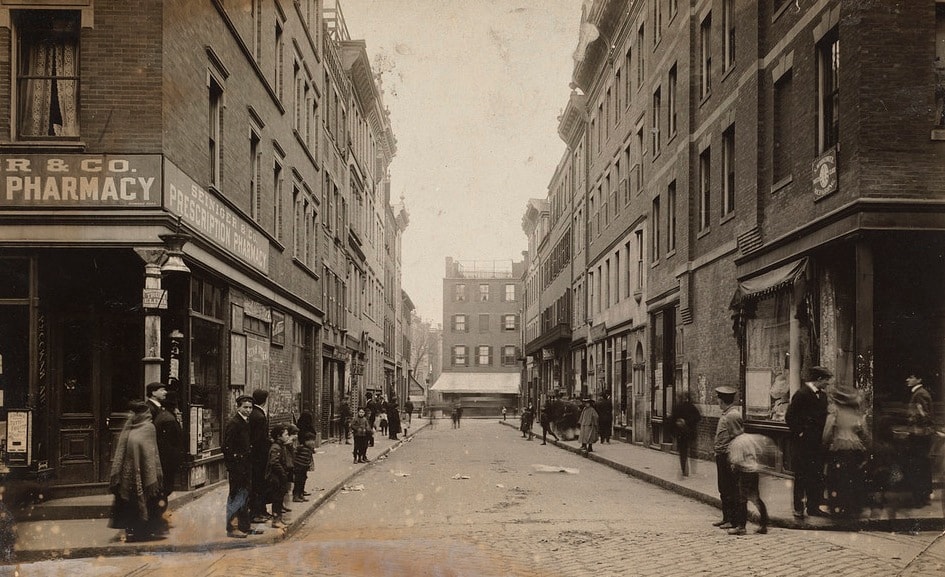
A street in Boston's Old West End, where Miriam Levine grew up.
Looking back on my first novel, Beguiled, I recall that I struggled with how to convey my protagonist Miriam Levine's decision to entrust her 2-year-old son to her parents in Boston, while moving to New York to study acting. Since childhood, her father had taken her to the theater, a love of his. So she was smitten with the theater beginning at age 3. It was not something girls of her background were expected to do themselves. It was considered to be risqué, low class. But to Miriam, it was the height of excitement and glory. She joined a high school theater group and loved performing. Having a child and having left an abusive marriage didn't deter her from continuing this dream.
The expectation for young women of the 1920s–30s was to marry well, stay home, keep house, and have a few children. That was not Miriam's intention or inclination. Although she loved her adorable son dearly, she knew that her parents did also. So she took the opportunity of her parents' glee at the prospect to travel to NYC to see her friend and enter acting school.
Flash forward to 2026. Where are we now with our expectations for women? In the intervening years, it has become commonplace for mothers to work, often because the family required two incomes. More women than men get college educations. More advance to top positions in institutions and corporations. On the dark side, however, is the fact that there is growing opposition among young men especially to this equality with women. Social media and organizations abound with young men who are threatened by this apparent challenge to their "superiority" and demand that women go back to their place in the home. Some even advocate for women losing the right to vote. This is a growing subgroup within the US.
Miriam's decision to leave her son — albeit including frequent visits home — was remarkable for its courage, despite her occasional bouts of guilt and her always missing him. Now 100 years later, our culture is again pushing back on women's rights. What is it about Miriam that fostered her openness to doing what she did? What is it about young men now that causes them to feel so threatened?
When you read Beguiled and its sequel Becoming a Woman of Substance, you will come to your own conclusions. Please leave messages to me on the Contact page here about what you make of this cultural reversal — at the expense of women and young males' sense of threat. I read and respond to every comment.